
Every winter, we get calls from homeowners who are sick of waking up with a scratchy throat, watching their wood floors gap and crack, or just plain feeling cold even though the thermostat says 70 degrees. Nine times out of ten, the culprit is the same thing: dry air. Kansas winters are genuinely hard on homes and the people inside them, and once you’ve felt what a properly humidified house feels like, you’ll never go back.
One of the questions we hear almost every day is whether a portable humidifier from the hardware store is good enough or whether it’s worth installing a whole-house system tied into the furnace. We’ve been doing this since 1977, and the honest answer is: it depends on what problem you’re actually trying to solve.
What a Portable Humidifier Can — and Can’t — Do
Portable units have their place. If you have one bedroom where someone wakes up congested every morning, or a nursery that needs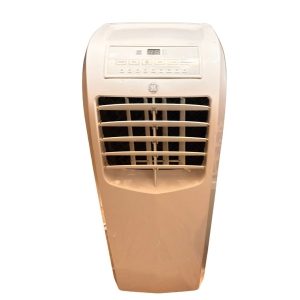 a little extra moisture, a portable humidifier can handle that specific spot reasonably well. They’re inexpensive upfront, you can move them around, and you don’t need a technician to set one up.
But here’s the thing — most of our customers who call us about dry air have already tried the portable route. They’ve got one in the bedroom, maybe another in the living room, and they’re still uncomfortable. That’s because portable humidifiers are fighting a losing battle against a forced-air heating system that’s running all day, pulling moisture out of every room in the house simultaneously. You’re adding humidity to one corner while the furnace is drying out everything else. Portable units also need to be filled constantly; the filters get moldy if you’re not careful, and running three or four of them adds up on your electric bill faster than you’d think.
How a Whole House Humidifier Actually Works
A whole-house humidifier mounts directly on your ductwork, typically close to the furnace at the supply or return air plenum. It connects to a water line and draws its power from the furnace itself — most systems run on 24 volts, the same low-voltage circuit the furnace already uses. From there, it works with your existing HVAC system to distribute humidity through every room in the house every time the furnace runs.
There are three types we install: bypass, fan-powered, and steam. The bypass style is our most popular — it has the fewest moving parts, it’s the most affordable, and the maintenance is simple. Once a year, before heating season, you swap out the water panel and you’re done. Fan-powered models add their own blower and can run independently without the furnace running, which works well for very large homes. Steam humidifiers are the premium option, completely separate from the ductwork and capable of very precise humidity control, though they do cost more, and the water quality in this area can cause mineral buildup over time.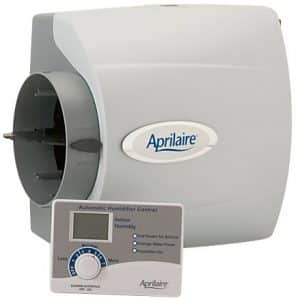
The Real-World Difference for Kansas Homeowners
Something we tell every customer: humidity changes how temperature feels. The same 70 degrees feels noticeably warmer when your indoor humidity is around 35 percent compared to when it’s bone-dry at 15 or 20 percent. That’s not a sales pitch — it’s physics. A lot of homeowners who install a whole-house humidifier find themselves turning the thermostat down a degree or two and still feeling more comfortable than before. Over a full heating season, that adds up.
Beyond comfort, there’s real money at stake when humidity gets too low. Hardwood floors dry out, and the planks start to separate. Wood furniture cracks. Musical instruments go out of tune and stay that way. Static electricity becomes a constant annoyance. And dry air makes it easier for cold and flu viruses to spread, something a lot of families in Douglas and Johnson County notice come January and February. A whole-house system keeps humidity in that 30 to 35 percent target range all season without any daily attention from you.
So Which One Is Right for You?
If you rent, or you’re dealing with one specific room and you just need something quick and inexpensive, a portable unit is fine. Get a decent one, clean it regularly, and keep up with the filter.
If you own your home and you’re tired of fighting dry air every winter, a whole-house humidifier is a permanent solution. Many of the new furnace installations we do include a humidifier because once customers understand the option, they want it. The installation is straightforward for a qualified technician, the ongoing maintenance is minimal, and the difference in comfort is something most families feel immediately.
We’re happy to take a look at your setup and tell you exactly what size makes sense for your home. Give Westerhouse a call at (785) 542-2707 or reach us through the contact page — we serve Eudora, Lawrence, DeSoto, Baldwin City, and the surrounding area, and we’ve been doing this long enough to have seen just about every situation a Kansas winter can throw at a heating system